

For most of us, “angel” means a glowing, human-shaped figure with soft feathery wings and a halo. That image comes from centuries of Renaissance paintings, greeting cards, and Christmas tree toppers — not from the Bible itself. When people go back and actually read the source material, they find something far stranger: beings covered in eyes, wheels that move without turning, and creatures with four faces. This is the idea behind the “biblically accurate angels” trend that keeps resurfacing online, and it raises a fair question — what does the Bible actually say?
This guide breaks down what Scripture describes when it talks about angels, cherubim, seraphim, and the wheel-like ophanim, using direct references from the King James Version (KJV) so you can see exactly where each detail comes from.
What Does “Biblically Accurate” Actually Mean?
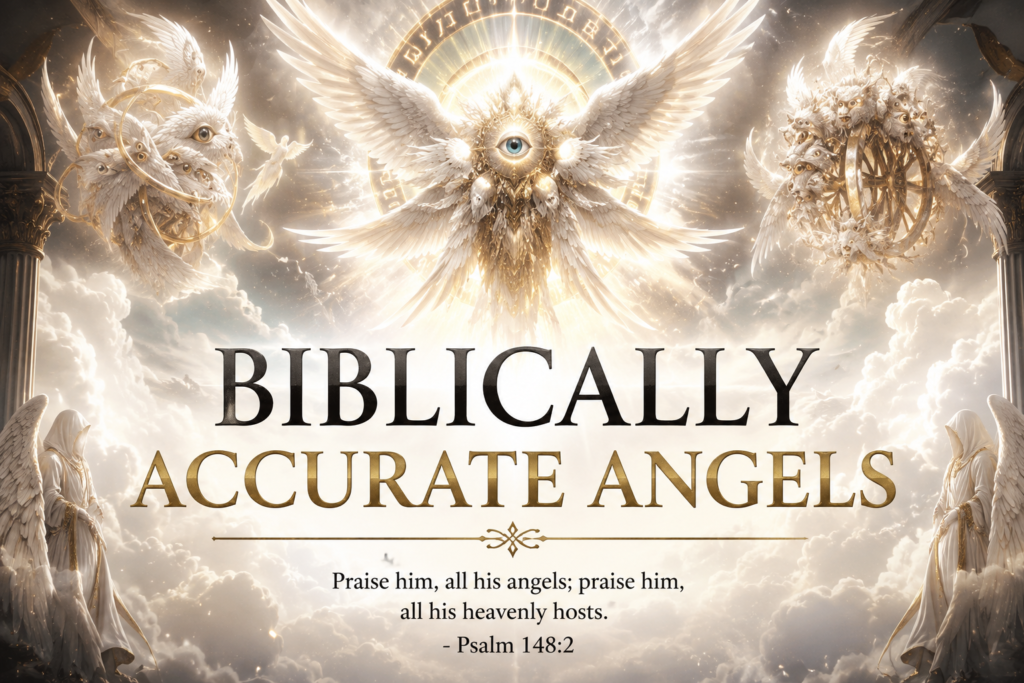
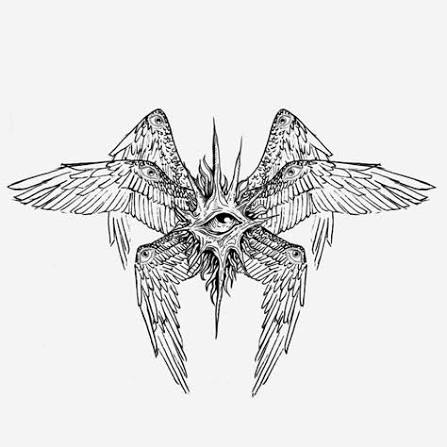
“Biblically accurate angel” is a phrase that took off on social media as artists and Bible readers started illustrating angels exactly as the text describes them, instead of following traditional Western art conventions. The result looks less like a Renaissance fresco and more like something out of a horror film — multiple wings, burning wheels, and dozens of eyes.
It’s worth being clear about one thing up front: the Bible describes several different kinds of heavenly beings, and they are not interchangeable. Standard angels, cherubim, seraphim, and the “wheels” (ophanim) each get their own separate descriptions in Scripture. Lumping them all together as one generic “angel” is actually where most popular art gets it wrong.
The Most Common Angels: They Looked Like Ordinary Men
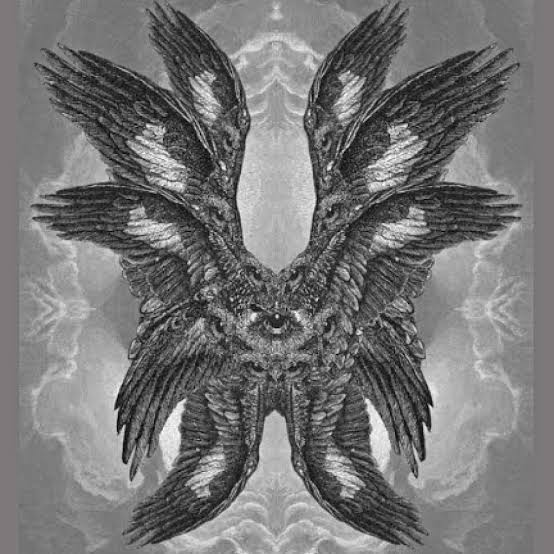
This is the detail that surprises people the most. In the majority of biblical encounters, angels don’t appear with wings, halos, or glowing light at all. They appear as ordinary human men.
- In Genesis 18, three visitors arrive at Abraham’s tent, and he treats them as regular travelers, offering them food and water. Two of them are later identified as angels in Genesis 19.
- Hebrews 13:2 (KJV) instructs believers to show hospitality to strangers, “for thereby some have entertained angels unawares” — implying angels were mistaken for normal people.
- In Daniel 10, a heavenly messenger appears with a body like precious stone, a face like lightning, eyes like torches, and arms and feet the color of polished brass, showing that some angelic appearances were still overwhelming even without wings.
- At the empty tomb in Mark 16:5, the angel is described simply as “a young man” sitting in a long white garment.
So the default biblical picture of an angel is not a winged figure at all — it’s a man who could pass for human until he does something that gives him away, like vanishing, appearing suddenly, or delivering an unmistakably supernatural message.
Cherubim: Guardians With Multiple Faces and Wings
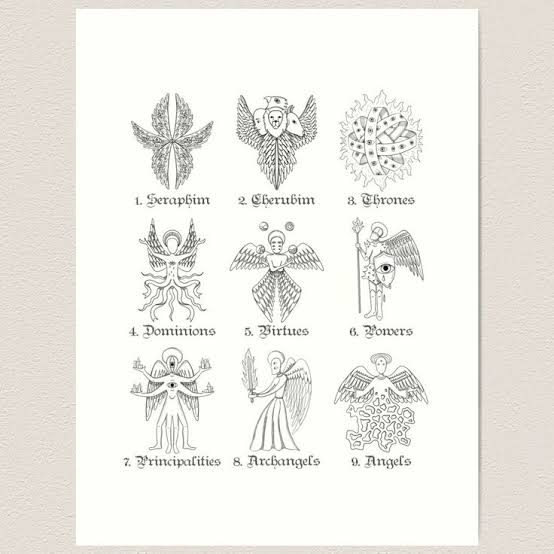
Cherubim (the plural of “cherub”) are a separate class of being entirely, and they are nothing like the chubby infant cherubs seen in classical art. They first appear in Genesis 3:24, stationed with a flaming sword to guard the entrance to Eden after Adam and Eve were exiled.
Their fullest description comes from Ezekiel 1 and Ezekiel 10, where the prophet sees them as part of a vision of God’s throne:
- Each cherub has four faces: a man, a lion, an ox, and an eagle (Ezekiel 1:10).
- Each has four wings — two spread out for flight and two covering its body (Ezekiel 1:6, 11).
- Their legs are straight, and their feet resemble the sole of a calf’s foot, gleaming like polished brass (Ezekiel 1:7).
- Their entire bodies, including their backs, hands, and wings, are covered in eyes (Ezekiel 10:12).
- They move in perfect unison, without turning, and are always accompanied by wheels.
Cherubim also appear as decorative and symbolic imagery in Exodus 25, where God instructs that two golden cherubim be placed on top of the Ark of the Covenant, facing each other with wings outstretched.
Seraphim: Six-Winged Beings of Fire
Seraphim appear by name only once in the Bible, in Isaiah’s vision of God’s throne room:
- Isaiah 6:2 (KJV) — “Above it stood the seraphims: each one had six wings; with twain he covered his face, and with twain he covered his feet, and with twain he did fly.”
- They cry out to one another, “Holy, holy, holy, is the LORD of hosts,” and their voices are powerful enough to shake the temple’s foundations (Isaiah 6:3-4).
- One seraph takes a live coal from the altar with tongs and touches it to Isaiah’s lips to cleanse him (Isaiah 6:6-7).
The word “seraphim” is related to a Hebrew root meaning “to burn,” which is why they’re often associated with fire and radiant light. Unlike cherubim, no faces or wheels are mentioned in connection with seraphim; their defining trait is the six wings used to cover their face, cover their feet, and fly.
Ophanim: The “Wheels Within Wheels”
The strangest imagery of all belongs to the ophanim, the wheel-like structures Ezekiel sees beside the cherubim. This is the detail most often exaggerated in popular art, so it’s worth reading closely.
Ezekiel 1:15-21 (KJV) describes:
- One wheel on the earth beside each of the four living creatures.
- The appearance of the wheels was “like unto the colour of a beryl,” and all four wheels had one identical shape.
- “Their appearance and their work was as it were a wheel in the middle of a wheel” — meaning one wheel intersected another at a right angle, allowing movement in any direction without turning.
- The rings (rims) of all four wheels were “so high that they were dreadful,” and they were full of eyes all around.
- The wheels moved only when the living creatures moved, because “the spirit of the living creature was in the wheels.”
Contrary to many viral illustrations, Scripture describes two intersecting wheels per creature, not a spinning cluster of many wheels. That single detail — often exaggerated online — is one of the most common inaccuracies even in art that claims to be “biblically accurate.”
Archangels and Named Angels in Scripture
Most angels in the Bible go unnamed, but a handful are identified directly, and each has a distinct role:
- Michael – Called an archangel in Jude 1:9 and described in Daniel 10:13 as “one of the chief princes.” He leads God’s armies against evil forces in Revelation 12:7, fighting the dragon (Satan) and casting him out of heaven.
- Gabriel – Appears in Daniel 8:16 and 9:21 to explain visions, then in Luke 1 to announce the births of John the Baptist and Jesus. Gabriel identifies himself in Luke 1:19 as one who “stands in the presence of God.”
- Lucifer – Isaiah 14:12 refers to a “son of the morning” cast down from heaven, a passage many theologians connect to Satan’s origin, though the Hebrew term itself simply means “morning star” or “shining one.”
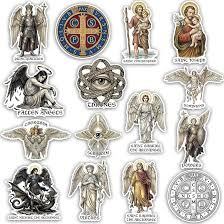
Beyond these named figures, the Bible occasionally hints at a broader angelic order — terms like “principalities” and “powers” appear in Ephesians 6:12 and Colossians 1:16, suggesting ranks or categories of spiritual beings. Scripture never lays out a complete organizational chart, though, so most detailed angelic hierarchies (such as the nine-tier system popularized in later Christian tradition) come from theological writings outside the Bible rather than the biblical text itself. It’s a useful reminder that not everything commonly said about angels — even in church teaching — is drawn directly from Scripture.
What the Bible Says Angels Are Not
Because “biblically accurate angels” content often corrects misconceptions, it helps to note a few things Scripture explicitly rules out:
- Angels are not deceased humans. Popular culture often imagines people “becoming angels” after death, but the Bible presents angels as a separate order of created beings, distinct from humanity from the start (Psalm 148:2-5).
- Angels are not to be worshiped. In Revelation 19:10 and 22:8-9, John falls down to worship an angel and is immediately corrected: “See thou do it not… worship God.”
- Angels are not omniscient. Matthew 24:36 notes that even the angels in heaven do not know the day or hour of Christ’s return, indicating limits to their knowledge.
- Not all angels are good. Revelation 12:7-9 and 2 Peter 2:4 describe angels who rebelled against God and were cast out, commonly referred to as fallen angels or demons.
Keeping these boundaries in mind is part of what makes a depiction “biblically accurate” rather than just visually dramatic — accuracy applies to an angel’s nature and role, not only its wings and eyes.
Comparison Table: Angels, Cherubim, Seraphim, and Ophanim
| Being | Key Bible Reference | Physical Description | Primary Role |
| Angels (general) | Genesis 18-19; Daniel 10; Hebrews 13:2 | Usually appear as ordinary men; occasionally described with a body like stone, a face like lightning, and eyes like torches | Messengers, protectors, deliverers of God’s word |
| Cherubim | Ezekiel 1 & 10; Genesis 3:24; Exodus 25 | Four faces (man, lion, ox, eagle); four wings; straight legs with calf-like feet; bodies covered in eyes | Guardians of sacred space; bearers of God’s throne |
| Seraphim | Isaiah 6:1-7 | Six wings (two cover the face, two cover the feet, two for flight) | Worship and proclaim God’s holiness; purify |
| Ophanim (“wheels”) | Ezekiel 1:15-21; Ezekiel 10:9-13 | Wheel intersecting another wheel; rims full of eyes; moves with the cherubim | Part of the structure supporting God’s throne/chariot |
Common Angel Encounters in the Bible
Beyond their appearance, angels perform a range of tasks throughout Scripture. Here are some of the most well-known encounters:
- Announcing births – Gabriel tells Mary she will give birth to Jesus (Luke 1:26-38), and an angel tells Zechariah about John the Baptist’s birth (Luke 1:11-20).
- Delivering warnings – An angel warns Joseph in a dream to flee to Egypt with Mary and Jesus (Matthew 2:13).
- Providing protection – Psalm 91:11 (KJV) says, “For he shall give his angels charge over thee, to keep thee in all thy ways.”
- Executing judgment – An angel of the Lord strikes down the Assyrian army in 2 Kings 19:35.
- Delivering God’s people – An angel opens prison doors for the apostles in Acts 5:19 and frees Peter from jail in Acts 12:7-10.
- Worshiping God continuously – Revelation 4-5 describes four “living creatures” (closely related to cherubim and seraphim imagery) worshiping around God’s throne day and night.
Why Angels Often Say “Fear Not”
One detail that ties all of this together is how frequently angels have to reassure people before saying anything else. In Luke 1:30, Luke 2:10, and Daniel 10:12, the first words out of an angel’s mouth are some version of “do not be afraid.” If angels typically looked like harmless, cartoonish figures with tiny wings, this reaction wouldn’t make sense. The repeated need for reassurance is itself evidence that angelic appearances were overwhelming, unfamiliar, and sometimes physically terrifying — which lines up far more closely with the wheels, eyes, and multiple faces described in Ezekiel than with soft Renaissance imagery.
How Traditional Angel Art Differs From Scripture
| Traditional Depiction | What the Bible Actually Describes |
| Human figure with two feathered wings | Most angels appear with no wings at all; cherubim have four wings, seraphim have six |
| Soft glowing halo | Not mentioned in Scripture; a later artistic convention |
| Chubby winged infants (cherubs) | Cherubim have four faces, straight legs, and eyes covering their bodies |
| Angels playing harps in the clouds | Not found in the Bible; a common medieval and Renaissance artistic theme |
| Single spinning wheel or a cluster of wheels | Ophanim are two wheels intersecting at right angles, covered in eyes |
Frequently Asked Questions
Are cherubim and angels the same thing?
No. Angels are described as messengers who often appear human, while cherubim are a distinct class of being with four faces, four wings, and bodies covered in eyes.
Do angels really have wings in the Bible?
Most angels described in Scripture have no wings mentioned at all. Wings belong specifically to cherubim (four wings) and seraphim (six wings).
What are the “wheels within wheels” in the Bible?
They’re called ophanim, described in Ezekiel 1 as two wheels intersecting at right angles, with rims full of eyes, moving alongside the cherubim.
Why do angels have eyes all over their bodies?
Ezekiel 10:12 describes cherubim, their wheels, and their wings as full of eyes, symbolizing complete awareness and God’s all-seeing presence.
Is Satan considered a fallen angel or a cherub?
Ezekiel 28:14-16 describes a guardian cherub cast out for pride, a passage many interpret as describing Satan’s fall, though scholars debate the exact reference.
How many wings do seraphim have?
Six. Isaiah 6:2 says two covered the seraph’s face, two covered its feet, and two were used for flying.
Why does the Bible say angels look like men?
Genesis 18-19 and Hebrews 13:2 describe angels appearing as ordinary travelers, showing that most angelic encounters were not visually dramatic.
Do all angels look the same in the Bible?
No. Descriptions vary widely, from ordinary-looking men to overwhelming beings with faces like lightning, and to multi-winged, multi-faced cherubim and seraphim.
Final Thoughts
The “biblically accurate angels” trend isn’t just an internet joke — it’s a genuine invitation to slow down and read these passages for what they actually say. Scripture presents angels as varied and, at times, genuinely strange: ordinary-looking messengers in one chapter, wheel-covered, many-eyed guardians in the next. Reading Ezekiel, Isaiah, Daniel, and the Gospels side by side shows just how far popular art has drifted from the original text, and how much richer the biblical picture really is once you go back to the source.

I have 7 years of experience with strong knowledge of how to create content that informs and inspires. I am passionate about writing and sharing Bible guidance. To help people grow in faith and understand God’s Word
