

Many parents choose names not only for their beauty but for the deeper meaning they carry. The name Tristan is one such name — rich in history, layered in symbolism, and connected to powerful spiritual themes.
While Tristan is not directly mentioned in the Bible, its meaning resonates deeply with core biblical truths about sorrow, endurance, redemption, and faith. Understanding the Tristan meaning in Bible context can inspire believers to see their struggles through God’s eyes.
Does Tristan Appear in the Bible?
The straightforward answer is no — the name Tristan does not appear anywhere in the Bible, neither in the Old Testament nor the New Testament. No prophet, king, priest, or disciple in Scripture bears this name. Tristan originated from Celtic and Latin traditions, not Hebrew or Greek — the two primary languages of the Bible.
However, the absence of a name in Scripture does not strip it of spiritual significance. Many names used by Christian families today come from non-biblical origins, yet they carry values that align beautifully with God’s Word. Tristan is exactly that kind of name.
Tristan Name Origin and Etymology
To understand the biblical meaning of Tristan, we first need to trace where the name comes from.
| Origin | Root Word | Core Meaning |
| Latin | Tristis | Sad, sorrowful, melancholic |
| Celtic/Pictish | Drustan or Drust | Tumult, bold, warrior spirit |
| Old French | Tristan | Popularized through medieval literature |
| Welsh | Trystan | Noise, courage, inner strength |
Most scholars agree the name traveled from the ancient Pictish name Drustan, common among Celtic warriors of early Britain. Over centuries, it evolved through Old French into Tristan, becoming widely known through the medieval legend of Tristan and Isolde — a tragic love story that highlighted themes of deep longing, loyalty, and loss.
This dual origin — sorrow from Latin and strength from Celtic — gives the name a layered spiritual personality that mirrors the Christian journey itself.
Spiritual Meaning of Tristan in a Biblical Context
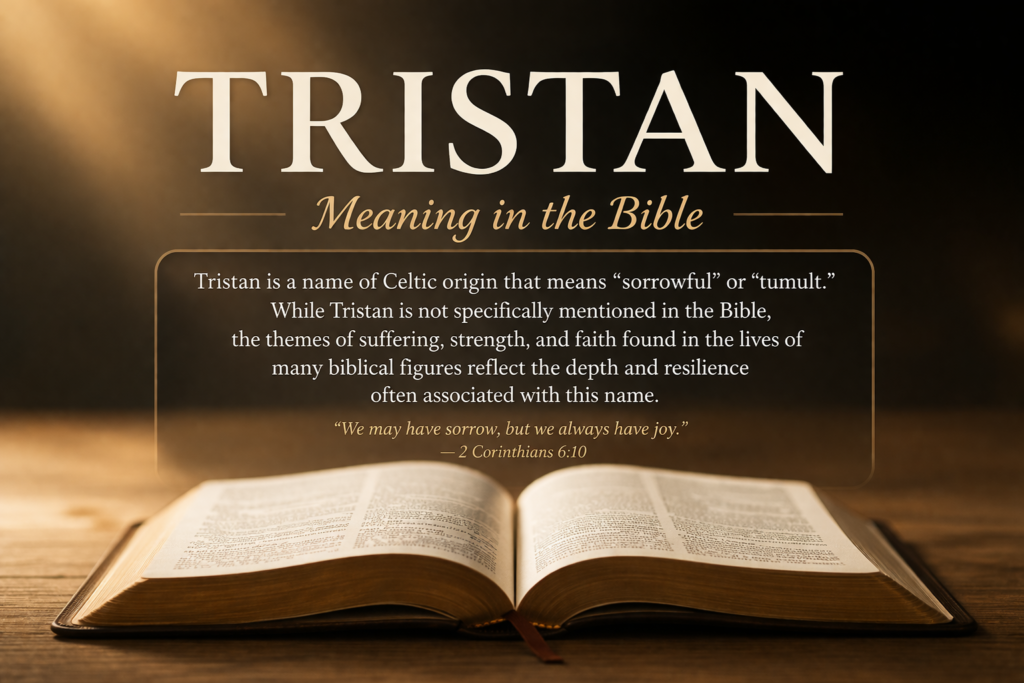
Even without a direct biblical mention, the spiritual meaning of Tristan aligns with some of the most recurring themes in Scripture.
1. Sorrow Transformed by Faith
The Latin root tristis means sorrowful, and sorrow is one of the most honest emotions explored throughout the Bible. From the Psalms of lament to Job’s afflictions and Christ’s grief in Gethsemane, Scripture never avoids human pain. Instead, it shows how God meets us in our lowest moments and turns mourning into meaning.
“Weeping may endure for a night, but joy comes in the morning.” — Psalm 30:5
This verse perfectly captures the spiritual symbolism behind Tristan’s name. The sorrow does not stay — God transforms it.
2. Endurance and Perseverance
The Celtic root of Tristan — meaning bold and tumultuous — reflects the warrior spirit that Scripture consistently celebrates in men and women of faith. Paul’s writings are full of encouragement to endure hardship as a path to character and hope.
“Suffering produces perseverance; perseverance, character; and character, hope.” — Romans 5:3–4
This passage mirrors the very essence of the name Tristan: someone who walks through difficulty and comes out spiritually stronger on the other side.
3. Pain Leading to Divine Purpose
One of the clearest biblical truths is that God uses pain purposefully. Joseph was sold into slavery before becoming a leader who saved nations. David wrote his most powerful psalms from places of deep grief. Job lost everything, yet his faith produced a testimony that still speaks today.
The name Tristan, rooted in sorrow, reflects this same journey — pain is not the destination but the path to something greater.
“And we know that in all things God works for the good of those who love him.” — Romans 8:28
Key Bible Verses That Reflect the Tristan Name

The following scriptures echo the core themes embedded in the Tristan biblical symbolism:
- Psalm 34:18 — “The Lord is close to the brokenhearted and saves those who are crushed in spirit.”
- Isaiah 41:10 — God promises strength to those who feel afraid and overwhelmed.
- James 1:12 — Those who persevere under trial receive the crown of life.
- 2 Corinthians 4:17 — Present troubles are producing an eternal glory far beyond comparison.
- Psalm 46:1 — God is an ever-present help in times of trouble.
Each of these passages speaks directly to the emotional and spiritual dimensions of the name Tristan — a soul acquainted with struggle yet anchored in divine hope.
Tristan and Biblical Figures Who Shared His Journey
Though no biblical character bears the name Tristan, several figures in Scripture walked a path that mirrors its meaning:
- Job — Endured profound sorrow and loss, yet maintained faith and was ultimately restored by God.
- David — Wrote psalms of deep anguish while remaining a man after God’s own heart.
- Joseph — Experienced betrayal and hardship that God used to fulfill an incredible purpose.
- Jeremiah — Known as the “weeping prophet,” he carried the burden of a broken nation yet remained obedient to God’s call.
Each of these figures embodied the essence of Tristan’s name: sorrow met with unshakeable faith.
Is Tristan a Good Christian Name?
Absolutely. Choosing the name Tristan for a child does not require it to appear in Scripture. What matters far more is the character and faith the person lives out. The name carries a built-in spiritual reminder — that life will hold sorrowful seasons, but God’s grace is sufficient, and His purposes are always redemptive.
Many Christian parents today are drawn to Tristan precisely because it captures a truthful, grounded faith: one that does not pretend life is painless, but trusts that God is present in every trial.
Conclusion
The Tristan meaning in Bible may not point to a specific verse or character, but it speaks loudly to the heart of what Scripture teaches. Rooted in the Latin word for sorrow and the Celtic spirit of courage, the name Tristan is a portrait of the Christian walk — honest about pain, anchored in hope, and moving always toward redemption. If you or someone you love carries this name, let it be a daily reminder that God turns grief into grace and trials into testimony.
Frequently Ask Question
Q: Is Tristan a biblical name?
No, Tristan does not appear in the Bible; it is of Celtic and Latin origin.
Q: What does Tristan mean spiritually?
It symbolizes sorrow transformed into strength, endurance, and redemption through faith in God.
Q: What is the Latin meaning of Tristan?
The Latin root tristis means “sad” or “sorrowful,” reflecting emotional depth and human vulnerability.
Q: Does Tristan have a Hebrew meaning?
No, Tristan has no Hebrew origin; it can only be phonetically transliterated into Hebrew as טריסטן.
Q: What Bible verse best connects to the name Tristan?
Psalm 30:5 — “Weeping may endure for a night, but joy comes in the morning” — best captures Tristan’s spiritual message.
Q: Is Tristan a good name for a Christian boy?
Yes, it reflects genuine faith — acknowledging hardship while trusting in God’s purpose and restoration.
Q: What is the Celtic meaning of Tristan?
The Celtic root means “tumult” or “bold,” representing courage, strength, and a warrior spirit.

I have 7 years of experience with strong knowledge of how to create content that informs and inspires. I am passionate about writing and sharing Bible guidance. To help people grow in faith and understand God’s Word
