

Wisdom is one of the most repeated themes in Scripture, appearing in books as different as Proverbs, James, and 1 Corinthians. Whether you are facing a hard decision, raising children, leading a team, or simply trying to grow closer to God, the Bible offers direct, practical guidance on what true wisdom looks like — and where it comes from.
This article gathers the most meaningful scripture on wisdom from both the Old and New Testaments, organized so you can find exactly what you need, whether that’s a verse for a devotional, a Bible study, or a moment when you need direction.
What Does the Bible Say About Wisdom?
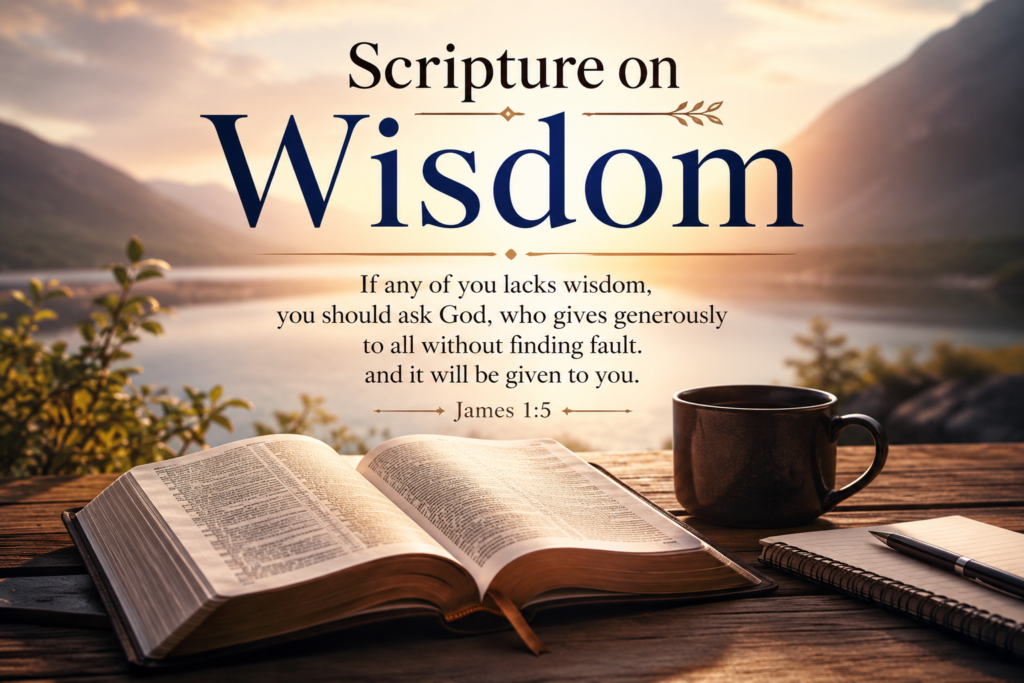
At its core, the Bible teaches that wisdom is not the same as intelligence or education. Biblical wisdom is the ability to see life the way God sees it and to respond accordingly. Proverbs 9:10 puts it plainly: “The fear of the Lord is the beginning of wisdom, and the knowledge of the Holy One is insight.”
That single verse sets the tone for the entire biblical view of wisdom. Wisdom starts with reverence for God, not with human cleverness. It shows up in how a person lives — their choices, their words, their relationships — rather than simply in what they know.
Scripture also draws a sharp line between wisdom and foolishness. A fool, in biblical terms, isn’t someone with low intelligence; it’s someone who rejects God’s instruction and trusts their own judgment instead (Proverbs 3:7). Wisdom, by contrast, is described as something to be actively pursued, valued above wealth, and asked for in prayer.
Old Testament Scripture on Wisdom
The Old Testament, especially the book of Proverbs, is the primary source for biblical teaching on wisdom. Solomon, famous for asking God for wisdom instead of riches, wrote much of this material.
Verses from Proverbs
- Proverbs 1:7 — “The fear of the Lord is the beginning of knowledge; fools despise wisdom and instruction.”
- Proverbs 2:6 — “For the Lord gives wisdom; from his mouth come knowledge and understanding.”
- Proverbs 3:13 — “Blessed is the one who finds wisdom, and the one who gets understanding.”
- Proverbs 4:7 — “The beginning of wisdom is this: Get wisdom, and whatever you get, get insight.”
- Proverbs 9:10 — “The fear of the Lord is the beginning of wisdom, and the knowledge of the Holy One is insight.”
- Proverbs 11:2 — “When pride comes, then comes disgrace, but with the humble is wisdom.”
- Proverbs 19:20 — “Listen to advice and accept instruction, that you may gain wisdom in the future.”
Verses from Job, Psalms, and Ecclesiastes
- Job 28:28 — “Behold, the fear of the Lord, that is wisdom, and to turn away from evil is understanding.”
- Psalm 90:12 — “So teach us to number our days that we may get a heart of wisdom.”
- Psalm 111:10 — “The fear of the Lord is the beginning of wisdom; all those who practice it have a good understanding.”
- Ecclesiastes 7:12 — “For the protection of wisdom is like the protection of money, and the advantage of knowledge is that wisdom preserves the life of him who has it.”
These passages show a consistent pattern: wisdom is a gift from God, it is closely tied to humility and obedience, and it directly affects how a person lives day to day.
New Testament Scripture on Wisdom
The New Testament builds on this foundation but adds a distinctly Christ-centered focus. Wisdom is no longer just an idea to pursue — in Jesus, it becomes a person to know.
Key New Testament Wisdom Verses
- James 1:5 — “If any of you lacks wisdom, let him ask God, who gives generously to all without reproach, and it will be given him.”
- James 3:17 — “But the wisdom from above is first pure, then peaceable, gentle, open to reason, full of mercy and good fruits, impartial and sincere.”
- 1 Corinthians 1:30 — “And because of him you are in Christ Jesus, who became to us wisdom from God, righteousness and sanctification and redemption.”
- Colossians 2:3 — Describing Christ, Paul writes that in him “are hidden all the treasures of wisdom and knowledge.”
- Ephesians 5:15-17 — “Look carefully then how you walk, not as unwise but as wise, making the best use of the time, because the days are evil.”
- Luke 21:15 — “For I will give you a mouth and wisdom, which none of your adversaries will be able to withstand or contradict.”
Notice the shift in emphasis here. While the Old Testament frames wisdom largely as a path of instruction and discernment, the New Testament frames it as something received through relationship with Christ and empowered by the Holy Spirit.
Old Testament vs. New Testament Wisdom: A Quick Comparison
| Aspect | Old Testament Wisdom | New Testament Wisdom |
| Primary source | Proverbs, Job, Ecclesiastes | James, Paul’s letters, Gospels |
| Central idea | Fear of the Lord as the starting point | Christ as the embodiment of wisdom |
| How it’s gained | Instruction, discipline, observation of life | Faith, prayer, and the Holy Spirit |
| Key figure | Solomon | Jesus Christ |
| Focus | Right living and moral discernment | Spiritual maturity and Christlike character |
Characteristics of Godly Wisdom
James 3:17 gives one of the clearest descriptions of what biblical wisdom actually looks like in practice. According to this verse, wisdom that comes from God is:
- Pure — free from selfish or hidden motives
- Peaceable — it seeks harmony rather than conflict
- Gentle — considerate in how it treats others
- Open to reason — willing to listen and be corrected
- Full of mercy — quick to forgive and show compassion
- Impartial — not swayed by favoritism
- Sincere — genuine, without pretense
This list is worth returning to whenever you’re evaluating a decision or a piece of advice. If it lacks these qualities, Scripture suggests it may not be wisdom from above at all, but what James calls “earthly, unspiritual, demonic” wisdom instead.
How to Ask God for Wisdom
One of the most practical promises in Scripture is found in James 1:5, where believers are told to simply ask God for wisdom. A few principles from Scripture on how this works:
- Ask in faith, without doubting (James 1:6) — a wavering, double-minded request undermines itself.
- Seek it like treasure — Proverbs 2:4 compares the pursuit of wisdom to searching for hidden silver.
- Study God’s Word — 2 Timothy 3:16-17 teaches that Scripture equips believers for every good work, wisdom included.
- Surround yourself with wise counsel — Proverbs 13:20 warns that walking with fools leads to harm, while walking with the wise brings growth.
- Practice humility — Proverbs 11:2 ties wisdom directly to a humble heart.
Wisdom, according to the Bible, is rarely instant. It grows through consistent obedience, prayer, and exposure to godly instruction over time.
Why Wisdom Matters More Than Knowledge
It’s worth pausing on a distinction Scripture draws that’s easy to miss. Knowledge is information — facts about God, the world, or right and wrong. Wisdom is the skill of applying that information rightly in real situations. Proverbs 4:7 places this pursuit above almost everything else, calling readers to “get insight” even at great cost.
This is why the Bible so often connects wisdom to everyday conduct rather than academic achievement. A person can have extensive knowledge of Scripture and still act foolishly if that knowledge never shapes their choices. James 3:13 makes the test explicit: true wisdom is proven “by his good life,” not by claims or credentials.
Bringing These Verses Into Daily Life
Reading scripture on wisdom is only the first step. A few simple ways to apply these verses:
- Memorize one verse at a time — Psalm 90:12 or James 1:5 are short and easy starting points.
- Pray Scripture back to God — turning James 1:5 into a personal prayer for wisdom before a big decision.
- Journal how a verse applies to a current situation — this moves wisdom from theory into practice.
- Discuss these verses in community — Proverbs 27:17 notes that people sharpen one another, much like iron sharpens iron.
Frequently Asked Questions
What is the main Bible verse about wisdom?
James 1:5 is often considered the central verse, promising that God gives wisdom generously to anyone who asks in faith.
What is the beginning of wisdom according to the Bible?
Proverbs 9:10 states that the fear of the Lord is the beginning of wisdom.
How can I gain wisdom according to Scripture?
By asking God in prayer, studying His Word, seeking wise counsel, and living with humility (James 1:5, Proverbs 13:20).
What is the difference between knowledge and wisdom in the Bible?
Knowledge is information; wisdom is applying that information rightly through godly, humble living (Proverbs 4:7, James 3:13).
Who is described as the wisest person in the Bible?
King Solomon, who asked God for wisdom to govern Israel and received unmatched insight (1 Kings 4:29).
Is Jesus called wisdom in the Bible?
Yes. 1 Corinthians 1:30 and Colossians 2:3 both describe Christ as the source and embodiment of God’s wisdom.
Conclusion
Scripture consistently points to one truth: real wisdom begins with God, not with human effort alone. From Solomon’s writings in Proverbs to James’ instruction in the New Testament, the Bible presents wisdom as something to be humbly requested, actively pursued, and faithfully lived out.
Whether you’re searching for direction in a specific decision or simply want to grow spiritually, these verses offer a solid, time-tested foundation to build on. The invitation found in James 1:5 remains open to anyone who asks: God gives wisdom generously to all who seek it.

I have 7 years of experience with strong knowledge of how to create content that informs and inspires. I am passionate about writing and sharing Bible guidance. To help people grow in faith and understand God’s Word
