

Sitting down to dinner is one of the few moments in a busy day when a Catholic family can pause together. Before the forks come out, that pause usually takes the shape of a short prayer — a few lines that turn an ordinary meal into an act of gratitude. If you grew up saying the same grace every night, or if you’re trying to bring this habit back into your own home, this guide walks through everything you need: the traditional prayers, simple variations for different occasions, and practical tips for making mealtime prayer a lasting family habit.
Why Catholics Pray Before Dinner
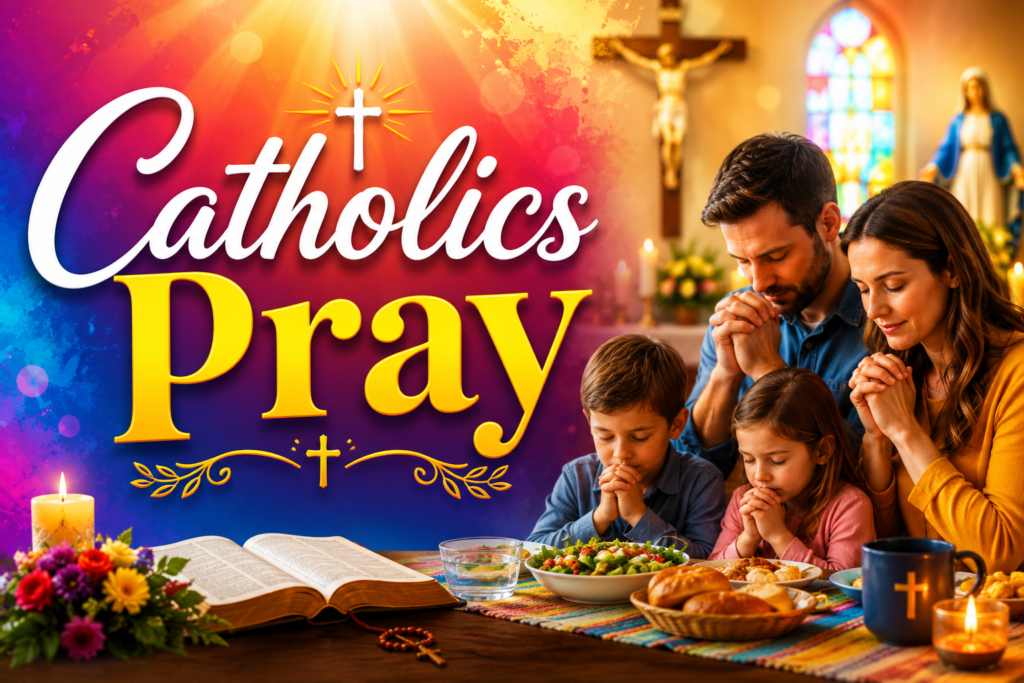
Praying before a meal isn’t just good manners toward God — it’s a reflex of faith. Catholic teaching holds that every good gift, including the food on the table, ultimately comes from God’s providence. Saying grace is a small but deliberate way of remembering that.
The custom has deep scriptural roots. Jesus himself gave thanks before feeding the crowds and before sharing bread with his disciples (Matthew 14:19, Luke 22:19, Luke 24:30). The early Church carried this habit forward, and it has stayed part of Catholic life ever since — at family tables, in convents, in school cafeterias, and at parish gatherings.
There are a few reasons this simple ritual has endured for so long:
- It expresses gratitude. A prayer before eating acknowledges that food doesn’t just appear — it’s a gift.
- It sanctifies an everyday act. Eating becomes something more than fueling the body; it becomes a small moment of worship.
- It builds unity at the table. Praying together, even in a few seconds, brings a family into a shared moment of reflection.
- It keeps the less fortunate in mind. Many mealtime prayers include a line asking God to remember those who have no food, which quietly builds compassion into a daily habit.
- It teaches children the faith. Kids who grow up saying grace absorb Catholic tradition without a formal lesson — the prayer itself becomes the teacher.
Pope Francis has spoken about this directly, encouraging Catholic families to return to the “beautiful and meaningful custom” of giving thanks to God both before and after meals, rather than letting the habit quietly disappear.
The Traditional Catholic Grace Before Meals
If you ask most Catholics to recite “the” prayer before dinner, they’ll give you some version of this one. It’s the prayer taught in Catholic schools, printed in prayer books, and passed down at family tables for generations.
Bless us, O Lord, and these Thy gifts, which we are about to receive from Thy bounty, through Christ our Lord. Amen.
This prayer is traditionally said with the Sign of the Cross before and after. It’s short by design — meant to be memorized easily by children and repeated without needing a prayer card. In just one sentence, it does three things: it asks for God’s blessing, acknowledges the food as a gift from His abundance (“bounty”), and offers the prayer through Christ, in keeping with Catholic prayer form.
A modernized, gender-neutral version that some families prefer sounds like this:
Bless us, O Lord, and these Your gifts, which we are about to receive from Your goodness, through Christ our Lord. Amen.
Both versions are considered acceptable. The words matter less than the intention behind them — a heart turned toward gratitude before the first bite.
The Traditional Grace After Meals
Grace after meals is far less common today, but it was once said just as regularly as grace before. It shifts the focus from asking for a blessing to giving thanks for one already received, and it adds a prayer for the souls of the faithful departed.
We give Thee thanks, Almighty God, for all Thy benefits, who livest and reignest, world without end. Amen. May the souls of the faithful departed, through the mercy of God, rest in peace. Amen.
Reviving this second prayer, even occasionally, adds a nice bookend to the meal — a moment of thanksgiving once everyone is full, rather than only asking beforehand.
Simple Table: Grace Before vs. Grace After Meals
| Aspect | Grace Before Meals | Grace After Meals |
| Purpose | Asks God to bless the food | Thanks God for the food received |
| Tone | Petition (asking) | Thanksgiving (gratitude) |
| Common today? | Very common | Rarely said, but meaningful to revive |
| Includes prayer for the dead? | No | Yes, typically |
| Best said | Right before eating | Right after finishing the meal |
More Catholic Dinner Prayers for Every Occasion
Not every family wants to say the exact same words every night. Catholic tradition offers plenty of variety, and mixing things up can keep young children engaged instead of reciting words on autopilot.
A Short Prayer of Thanks
Lord, we thank You for the food before us and for Your loving care. Bless what we are about to receive and those who prepared it. May this meal strengthen our bodies and draw our hearts closer to You. Through Christ our Lord. Amen.
A Prayer for Family Unity
Father of us all, this meal is a sign of Your love for us. Bless us and bless our food, and help us to give You glory each day through Jesus Christ our Lord. Amen.
A Prayer Remembering Those in Need
Bless us, O Lord, this food to our use, and us to Thy service, and keep us ever mindful of the needs of others. In Jesus’ name, Amen.
A Child-Friendly Grace
Thank You, God, for this food, for those who made it, and for our family together. Help us share with others. Amen.
A Sunday or Feast Day Dinner Prayer
Lord Jesus, on this day of rest we thank You for gathering us around this table. Bless this food, bless our conversation, and let this meal be a small sign of the heavenly banquet You have prepared for us. Amen.
These variations all keep the same basic structure: thank God, ask for a blessing on the food, and close through Christ. Once you understand that pattern, you can adapt the wording for any occasion — a birthday dinner, a holiday feast, or a quiet weeknight meal.
How to Say Grace as a Family: A Simple Step-by-Step
For families just starting this habit, or trying to revive it, here’s an easy structure to follow:
- Gather everyone at the table before anyone starts eating.
- Make the Sign of the Cross together (“In the name of the Father, and of the Son, and of the Holy Spirit. Amen.”).
- Recite the prayer — the traditional grace or a variation you’ve chosen for the night.
- Add a personal intention, if you like — a sick relative, someone struggling, or a simple thank-you for the day.
- Close with the Sign of the Cross again.
- Begin the meal together, ideally without screens at the table.
If you have young children, let them take turns leading the prayer once they’ve memorized it. It gives them ownership of the tradition instead of treating it as something only adults do.
Tips for Making Mealtime Prayer a Lasting Habit
Building any family habit takes consistency more than perfection. A few practical suggestions:
- Keep it short at first. A long, elaborate prayer every night can feel like a chore to young kids. Start with the traditional one-line grace and build from there.
- Say it the same way most nights. Familiarity helps children memorize the words and feel confident joining in.
- Reserve special prayers for special days. Save longer or seasonal prayers for Sundays, feast days, or holidays like Christmas Eve and Thanksgiving.
- Involve every family member. Rotating who leads the prayer keeps everyone engaged rather than passive.
- Don’t worry about “getting it right.” The words matter less than the sincerity behind them. A stumbled prayer said with a genuine heart still honors God.
- Bring it back if you’ve stopped. Many families let the habit slip during busy seasons. Restarting is as simple as saying the words again tonight.
Prayers Beyond the Traditional Latin Grace
While the Latin-Rite “Bless us, O Lord” prayer is the most familiar to most Catholics in the West, other rites within the Catholic Church have their own mealtime traditions.
Eastern Catholic Grace Before Meals
O Christ God, bless the food and drink of Thy servants, for holy art Thou, always, now and ever, and unto the ages of ages. Amen.
Eastern Catholic Grace After Meals
We thank Thee, O Christ our God, that Thou hast satisfied us with Thine earthly gifts; deprive us not of Thy Heavenly Kingdom, but as Thou camest among Thy disciples, O Savior, and gavest them peace, come unto us and save us.
These prayers, used in Byzantine and other Eastern Catholic churches, follow a similar spirit to the Latin grace but with their own liturgical phrasing, often sung or chanted rather than spoken.
Table: Quick Reference of Dinner Prayers by Occasion

| Occasion | Suggested Prayer Style |
| Everyday weeknight dinner | Traditional “Bless us, O Lord” grace |
| Family dinner with young kids | Child-friendly short grace |
| Sunday or feast day meal | Longer prayer of thanksgiving |
| Meal after fasting or hardship | Prayer remembering the needs of others |
| Eastern Catholic household | Byzantine grace before/after meals |
| After the meal is finished | Traditional grace after meals |
The Deeper Meaning Behind Saying Grace
It’s worth pausing on why this small ritual carries so much weight in Catholic life. The Catechism of the Catholic Church notes that Christians, whether eating alone or with others, say grace before and after meals to thank God for providing their daily food — and that this habit also recalls how Jesus joined the Eucharist with the ritual of a shared meal, revealing himself to his disciples “in the breaking of the bread.”
There’s also a call to remembrance built into the tradition. Gathering at a table and seeing the meal as a sign of God’s blessing is meant to make Catholics mindful of those who go without — encouraging generosity, moderation, and occasionally welcoming someone in need to share the table.
In other words, saying grace isn’t only about the food in front of you. It’s a small daily rehearsal of gratitude, humility, and awareness of others — values that carry far beyond the dinner table.
Frequently Asked Questions
What is the most common Catholic prayer before dinner?
The most widely used is “Bless us, O Lord, and these Thy gifts, which we are about to receive from Thy bounty, through Christ our Lord. Amen.”
Do Catholics also pray after eating?
Yes, though less commonly today. The traditional grace after meals gives thanks for the food received and prays for the souls of the faithful departed.
Is it okay to make up your own dinner prayer?
Yes. Many Catholic families personalize their grace, as long as it keeps the spirit of gratitude and blessing central to the prayer.
Should children say grace too?
Absolutely. Letting children lead or recite the prayer helps them memorize it and builds a lifelong habit of gratitude.
Do you make the Sign of the Cross before and after grace?
Traditionally, yes. It marks the beginning and end of the prayer and connects it to the wider rhythm of Catholic prayer life.
Is there a different prayer for holidays like Christmas or Thanksgiving?
Many families use a longer, more reflective prayer on special occasions, though the traditional grace works for any day of the year.
Can grace be prayed silently instead of out loud?
Yes. While praying aloud together is common for families, an individual eating alone can pray the same words silently or in their heart.
Final Thoughts
Saying grace before dinner takes only a few seconds, but it carries a tradition that stretches back to Christ’s own example at the table. Whether you use the familiar words passed down for generations or a shorter version your family has made your own, what matters most is the pause itself — a small, deliberate moment of thanks before the meal begins. Bringing this habit back to your table, even one dinner at a time, is a simple way to keep faith present in daily life.

I have 7 years of experience with strong knowledge of how to create content that informs and inspires. I am passionate about writing and sharing Bible guidance. To help people grow in faith and understand God’s Word
