

Anger toward someone who has hurt you deeply is one of the rawest emotions a person can feel. Maybe someone betrayed your trust, hurt your family, or wronged you so badly that dark thoughts crept in — thoughts you never expected to have. If you’ve ever secretly wished harm on someone, or felt a flash of rage so strong it scared you, you are not alone, and you are not beyond hope.
The Bible does not pretend these feelings don’t exist. Scripture is full of real people — David, Job, the prophets — who cried out for justice, even vengeance, against their enemies. But alongside those raw, honest prayers, God’s Word also points toward something higher: trust in His justice, the discipline to release revenge, and the call to love even those who hate us.
This article walks through 42 Bible verses about wanting to kill your enemies, organized by theme, so you can see both the honesty of Scripture about anger and the path it offers toward peace, forgiveness, and healing.
Why Does the Bible Talk About Hatred and Vengeance at All?
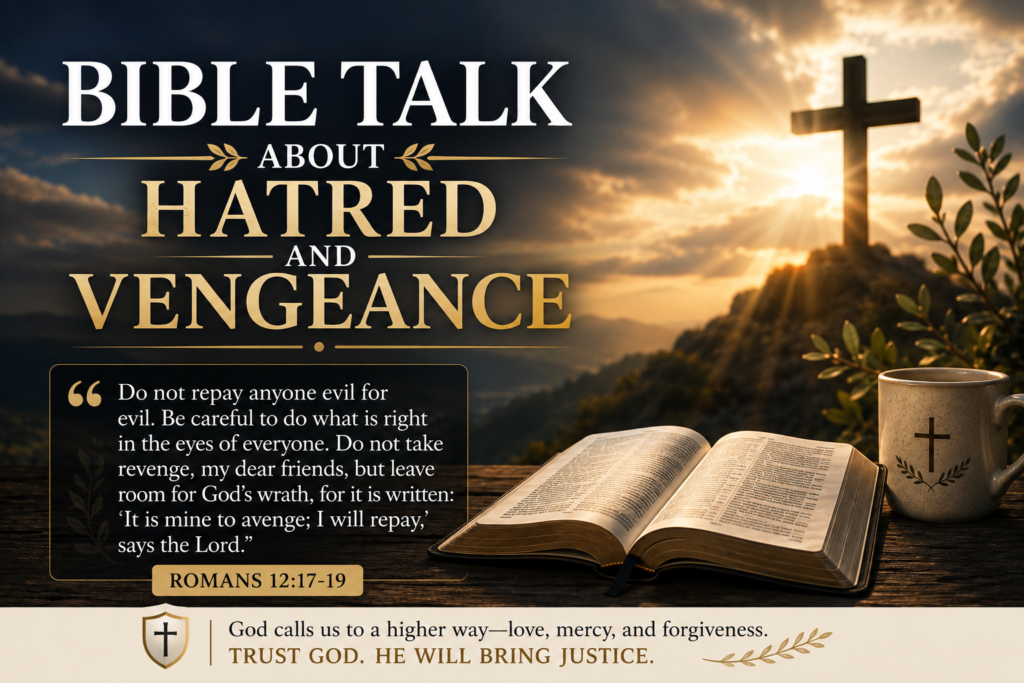
Scripture never hides from human emotion. The Psalms alone contain what scholars call “imprecatory psalms” — prayers where the writer asks God to bring down judgment on his enemies. These passages show that God can handle our anger, our grief, and even our desire for justice. He would rather we bring those feelings to Him in prayer than let them fester into sin.
At the same time, the New Testament raises the standard even higher. Jesus doesn’t just say “don’t take revenge” — He says to love your enemies and pray for the people who hurt you. That’s a hard teaching, but it’s also the one that sets believers free from the weight of bitterness.
Below, these 42 verses are grouped into six categories: Old Testament cries for justice, verses about anger and its dangers, verses reminding us that vengeance belongs to God, New Testament commands to love enemies, verses about forgiveness and mercy, and verses that promise God’s protection and peace when we let go of revenge.
1. Old Testament Verses Crying Out Against Enemies
These verses reflect the raw honesty of biblical writers — especially David — who brought their pain, fear, and anger straight to God rather than acting on it themselves.
| # | Verse | Reference |
| 1 | “Plead my cause, O LORD, with them that strive with me: fight against them that fight against me.” | Psalm 35:1 |
| 2 | “Let their way be dark and slippery: and let the angel of the LORD persecute them.” | Psalm 35:6 |
| 3 | “Let destruction come upon him at unawares; and let his net that he hath hid catch himself.” | Psalm 35:8 |
| 4 | “Set thou a wicked man over him: and let Satan stand at his right hand.” | Psalm 109:6 |
| 5 | “Let his days be few; and let another take his office.” | Psalm 109:8 |
| 6 | “Let their table become a snare before them: and that, which should have been for their welfare, let it become a trap.” | Psalm 69:22 |
| 7 | “Break their teeth, O God, in their mouth: break out the great teeth of the young lions, O LORD.” | Psalm 58:6 |
| 8 | “O God, break the teeth in their mouth… let them melt away as waters which run continually.” | Psalm 58:6-7 |
| 9 | “Do not I hate them, O LORD, that hate thee? … I hate them with perfect hatred.” | Psalm 139:21-22 |
| 10 | “Consume them in wrath, consume them, that they may not be.” | Psalm 59:13 |
| 11 | “The righteous shall rejoice when he seeth the vengeance.” | Psalm 58:10 |
| 12 | “Rise up, LORD, disappoint him, cast him down: deliver my soul from the wicked.” | Psalm 17:13 |
These prayers can feel shocking to read. But they teach an important lesson: it’s not sinful to bring your anger to God in prayer. What matters is what you do next — whether you leave the outcome in His hands or try to take it into your own.
2. Verses Warning About the Danger of Anger and Hatred
Scripture is clear that unchecked anger is spiritually dangerous. These verses show why nursing hatred toward an enemy ultimately hurts the person holding onto it.
- Matthew 5:21-22 — “Ye have heard that it was said… Thou shalt not kill… But I say unto you, That whosoever is angry with his brother without a cause shall be in danger of the judgment.”
- Exodus 20:13 — “Thou shalt not kill.”
- Galatians 5:19-21 — “Now the works of the flesh are manifest, which are these… hatred, variance, emulations, wrath, strife… they which do such things shall not inherit the kingdom of God.”
- Ephesians 4:26-27 — “Be ye angry, and sin not: let not the sun go down upon your wrath: Neither give place to the devil.”
- James 1:20 — “For the wrath of man worketh not the righteousness of God.”
- Proverbs 29:22 — “An angry man stirreth up strife, and a furious man aboundeth in transgression.”
- 1 John 3:15 — “Whosoever hateth his brother is a murderer: and ye know that no murderer hath eternal life abiding in him.”
- Proverbs 14:29 — “He that is slow to wrath is of great understanding: but he that is hasty of spirit exalteth folly.”
Taken together, these verses show that God doesn’t just judge our actions — He cares about the condition of our hearts. Even a desire to harm someone, left unchecked, is treated with the same seriousness as the act itself.
3. Verses Reminding Us That Vengeance Belongs to God
This is one of the most repeated themes in Scripture whenever the subject of enemies comes up. God doesn’t ask us to pretend we weren’t wronged — He asks us to trust Him with the outcome.
- Romans 12:19 — “Dearly beloved, avenge not yourselves, but rather give place unto wrath: for it is written, Vengeance is mine; I will repay, saith the Lord.”
- Deuteronomy 32:35 — “To me belongeth vengeance, and recompence; their foot shall slide in due time.”
- Proverbs 20:22 — “Say not thou, I will recompense evil; but wait on the LORD, and he shall save thee.”
- Leviticus 19:18 — “Thou shalt not avenge, nor bear any grudge against the children of thy people, but thou shalt love thy neighbour as thyself.”
- 1 Thessalonians 5:15 — “See that none render evil for evil unto any man; but ever follow that which is good.”
- Nahum 1:2 — “The LORD revengeth, and is furious; the LORD will take vengeance on his adversaries.”
- Psalm 94:1 — “O LORD God, to whom vengeance belongeth; O God, to whom vengeance belongeth, shew thyself.”
- 2 Thessalonians 1:6 — “Seeing it is a righteous thing with God to recompense tribulation to them that trouble you.”
When you feel the urge to “handle it yourself,” these verses offer a different path: hand the situation to God and trust His timing. He sees what you cannot, and His justice is perfect.
4. New Testament Verses Commanding Love for Enemies
Jesus took the Old Testament call for justice and raised it into something even more radical — love that reaches toward the people who hurt us most.
| Verse | What It Teaches |
| Matthew 5:44 | Love your enemies and pray for those who persecute you |
| Luke 6:27-28 | Bless those who curse you, do good to those who hate you |
| Luke 6:35 | Love your enemies, do good, and lend, hoping for nothing again |
| Romans 12:14 | Bless them which persecute you: bless, and curse not |
| Romans 12:20 | Feed your enemy if he hungers; give him drink if he thirsts |
| Romans 12:21 | Be not overcome of evil, but overcome evil with good |
| Matthew 5:39 | Resist not evil: turn the other cheek |
| 1 Peter 3:9 | Not rendering evil for evil… but contrariwise blessing |
| Proverbs 25:21-22 | If thine enemy be hungry, give him bread to eat |
| Proverbs 24:17 | Rejoice not when thine enemy falleth |
| Proverbs 24:29 | Say not, I will do so to him as he hath done to me |
| Exodus 23:4-5 | If thou meet thine enemy’s ox or his ass going astray, thou shalt surely bring it back to him again |
Notice how practical some of these commands are — feeding an enemy, returning a lost animal, refusing to celebrate someone’s downfall. Love for enemies isn’t only a feeling; it shows up in small, deliberate acts of kindness that go against what we’d naturally want to do.
5. Verses About Forgiveness, Mercy, and Overcoming Bitterness
Forgiveness doesn’t mean pretending you weren’t hurt. It means choosing to release the debt so it no longer controls you.
- Matthew 6:14-15 — “For if ye forgive men their trespasses, your heavenly Father will also forgive you.”
- Ephesians 4:31-32 — “Let all bitterness, and wrath, and anger… be put away from you… And be ye kind one to another, tenderhearted, forgiving one another.”
- Colossians 3:13 — “Forbearing one another, and forgiving one another… even as Christ forgave you, so also do ye.”
- Mark 11:25 — “When ye stand praying, forgive, if ye have ought against any.”
- 1 Corinthians 13:4-5 — “Charity suffereth long, and is kind… is not easily provoked, thinketh no evil.”
- Proverbs 19:11 — “The discretion of a man deferreth his anger; and it is his glory to pass over a transgression.”
- Hebrews 12:14-15 — “Follow peace with all men… looking diligently lest any root of bitterness springing up trouble you.”
- Matthew 18:21-22 — “How oft shall my brother sin against me, and I forgive him?… I say not unto thee, Until seven times: but, Until seventy times seven.”
Forgiveness is often less about the other person and more about protecting your own heart. Bitterness left unchecked tends to grow, but choosing to forgive — even slowly, even imperfectly — opens the door to healing.
6. Verses About God’s Protection, Justice, and Peace
These verses shift the focus away from the enemy entirely and back toward God’s care for those who trust Him.
- Psalm 23:5 — “Thou preparest a table before me in the presence of mine enemies.”
- 2 Chronicles 20:15 — “The battle is not yours, but God’s.”
- Isaiah 54:17 — “No weapon that is formed against thee shall prosper.”
- Psalm 27:1-3 — “The LORD is my light and my salvation; whom shall I fear?”
- Psalm 91:1-2 — “He that dwelleth in the secret place of the most High shall abide under the shadow of the Almighty.”
- Isaiah 41:10 — “Fear thou not; for I am with thee: be not dismayed; for I am thy God.”
- Proverbs 16:7 — “When a man’s ways please the LORD, he maketh even his enemies to be at peace with him.”
- Romans 8:31 — “If God be for us, who can be against us?”
- Philippians 4:6-7 — “Be careful for nothing; but in every thing by prayer and supplication… let your requests be made known unto God.”
- John 16:33 — “In the world ye shall have tribulation: but be of good cheer; I have overcome the world.”
When it feels like an enemy has the upper hand, these verses remind believers that safety and peace don’t come from winning a fight — they come from resting in God’s protection and trusting His plan.
A Short Prayer for Releasing Anger Toward an Enemy
If you’re struggling with these feelings right now, prayer is often the first step toward peace.
Heavenly Father, You know the anger and hurt I carry. I confess that I have wished harm on someone who wronged me, and I ask You to forgive me. Help me release every desire for revenge and trust Your justice instead of my own. Teach me to love my enemies, to pray for the people who have hurt me, and to guard my heart from bitterness. Replace my anger with Your peace, and my desire for vengeance with Your strength. In Jesus’ name, Amen.
Frequently Asked Questions
Is it a sin to want to kill your enemies?
Wanting to harm someone reflects anger and hatred, which Scripture treats seriously (Matthew 5:21-22), but God offers grace and calls believers to bring those feelings to Him instead of acting on them.
What does the Bible say about hating your enemies?
The Bible commands love, not hatred, toward enemies (Matthew 5:44), while also acknowledging in the Psalms that raw anger toward wrongdoers is a real, common human experience.
Why did David pray for God to destroy his enemies?
David’s imprecatory psalms were honest prayers asking God to bring justice, not calls for David himself to take revenge; he consistently left the outcome in God’s hands.
Does the Bible say vengeance belongs to God?
Yes. Romans 12:19 and Deuteronomy 32:35 both teach that vengeance belongs to the Lord alone, not to individuals.
How can I stop wanting revenge on someone who hurt me?
Prayer, forgiveness, and trusting God’s justice (Romans 12:19, Ephesians 4:31-32) are the biblical steps toward releasing a desire for revenge.
What is an imprecatory psalm?
An imprecatory psalm is a prayer, often written by David, that asks God to judge or punish an enemy, expressing honest anger while still trusting God with the outcome.
Can Christians ask God for justice against someone who wronged them?
Yes. Scripture models honest prayers for justice, but it also calls believers to leave vengeance to God rather than seeking it themselves (Psalm 94:1, Romans 12:19).
What does Jesus teach about enemies?
Jesus teaches believers to love their enemies, bless those who curse them, and pray for those who persecute them (Matthew 5:44, Luke 6:27-28).
Final Thoughts
Feeling anger toward someone who has deeply hurt you is human, and the Bible never shames you for that emotion. What Scripture does is offer a way through it — honest prayer, trust in God’s justice, and the freedom that comes from choosing forgiveness over bitterness. The imprecatory psalms show that you can bring even your darkest thoughts to God. The teachings of Jesus show that healing comes not from revenge, but from releasing it into His hands.
If you’re carrying anger toward an enemy today, let these 42 verses be a starting point — not to condemn what you’re feeling, but to guide you toward the peace, mercy, and freedom that God wants for your heart.

I have 7 years of experience with strong knowledge of how to create content that informs and inspires. I am passionate about writing and sharing Bible guidance. To help people grow in faith and understand God’s Word
