

Prayer is the heartbeat of the Christian life, and few things strengthen that heartbeat more than praying the words of Scripture itself. When we run out of our own words, the Bible steps in with language that has carried believers through fear, grief, joy, and gratitude for thousands of years. Whether you’re new to faith or have prayed for decades, Bible prayers offer a ready-made bridge between your heart and God’s.
Bible prayers are the different types found throughout Scripture, ten of the most powerful prayers you can pray today, and practical steps for turning any verse into a personal conversation with God. By the end, you’ll have a ready toolkit of Scripture-based prayers you can return to again and again, no matter what season of life you’re walking through.
What Are Bible Prayers?
Bible prayers are the actual, recorded words that people in Scripture spoke directly to God. They differ from general Bible verses about prayer (which teach principles) because they are prayers themselves — spoken by Abraham, Hannah, David, Solomon, Jesus, Paul, and many others.
Bible scholars have counted hundreds of individual prayers across the Old and New Testaments, ranging from a single desperate sentence to lengthy, poetic outpourings like the Psalms. Some were answered immediately. Others took years. A few, like Moses’ plea to enter the Promised Land, were not granted at all — yet they remain instructive examples of honest communication with God.
Why Pray Using Scripture
Praying Scripture isn’t about reciting words mechanically. It’s a practice with real spiritual benefits:
- It gives you language when you’re at a loss for words. Grief, anxiety, and joy can all leave us speechless — Scripture fills the gap.
- It aligns your requests with God’s will. Praying the Bible naturally shapes your desires around what God has already promised.
- It builds biblical literacy. The more you pray Scripture, the more of it you memorize and understand.
- It connects you to a larger story. You’re praying the same words used by prophets, kings, apostles, and ordinary believers before you.
Types of Prayers in the Bible
Scripture contains several distinct categories of prayer. Recognizing them helps you choose the right prayer for the right moment.
| Type of Prayer | Purpose | Example Figure |
| Praise | Honoring God’s character and greatness | David (Psalm 145) |
| Thanksgiving | Expressing gratitude for God’s provision | Jonah (Jonah 2) |
| Confession | Admitting sin and asking forgiveness | David (Psalm 51) |
| Petition / Supplication | Asking God to meet a specific need | Jabez (1 Chronicles 4:10) |
| Intercession | Praying on behalf of others | Abraham for Sodom (Genesis 18) |
| Blessing | Speaking God’s favor over people | Aaron (Numbers 6:24-26) |
| Lament | Bringing sorrow or complaint honestly to God | Job, many Psalms |
Most prayer routines naturally include several of these types in a single session — praise at the start, confession in the middle, and petition toward the end.
10 Powerful Prayers From the Bible You Can Pray Today
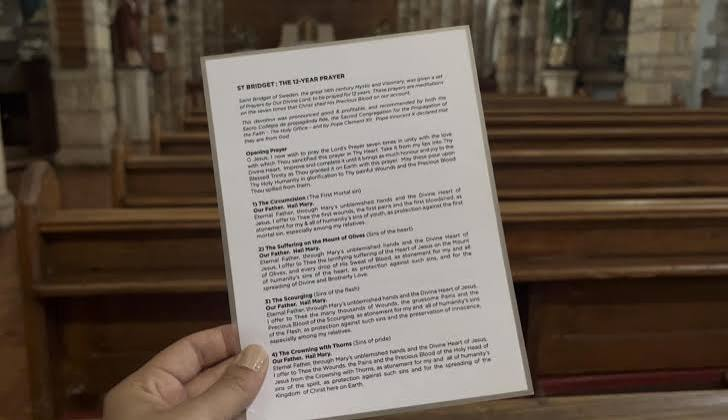
Below are ten well-known prayers, quoted from the King James Version, along with a short note on when to pray each one.
1. The Lord’s Prayer
“Our Father which art in heaven, Hallowed be thy name. Thy kingdom come, Thy will be done in earth, as it is in heaven. Give us this day our daily bread. And forgive us our debts, as we forgive our debtors. And lead us not into temptation, but deliver us from evil: For thine is the kingdom, and the power, and the glory, for ever. Amen.” — Matthew 6:9-13
Jesus gave this prayer as a template. Use it whenever you’re unsure how to structure your own prayer time.
2. The Aaronic Blessing
“The LORD bless thee, and keep thee: The LORD make his face shine upon thee, and be gracious unto thee: The LORD lift up his countenance upon thee, and give thee peace.” — Numbers 6:24-26
A beautiful prayer to speak over yourself, your children, or anyone you love.
3. Hannah’s Prayer of Thanksgiving
“My heart rejoiceth in the LORD, mine horn is exalted in the LORD: my mouth is enlarged over mine enemies; because I rejoice in thy salvation.” — 1 Samuel 2:1
Perfect for moments when a long-awaited prayer has finally been answered.
4. David’s Prayer of Confession
“Have mercy upon me, O God, according to thy lovingkindness: according unto the multitude of thy tender mercies blot out my transgressions.” — Psalm 51:1
A raw, honest prayer for anyone carrying guilt and seeking a fresh start.
5. Solomon’s Prayer for Wisdom
“Give therefore thy servant an understanding heart to judge thy people, that I may discern between good and bad.” — 1 Kings 3:9
Pray this before a major decision, new job, or season of leadership.
6. The Prayer of Jabez
“Oh that thou wouldest bless me indeed, and enlarge my coast, and that thine hand might be with me, and that thou wouldest keep me from evil, that it may not grieve me!” — 1 Chronicles 4:10
A short, bold prayer for expansion and protection.
7. Jesus in Gethsemane
“O my Father, if it be possible, let this cup pass from me: nevertheless not as I will, but as thou wilt.” — Matthew 26:39
The ultimate model of surrender when facing something difficult.
8. Paul’s Prayer for the Ephesians
“That the God of our Lord Jesus Christ, the Father of glory, may give unto you the spirit of wisdom and revelation in the knowledge of him.” — Ephesians 1:17
An intercessory prayer to pray over loved ones seeking spiritual growth.
9. The Prayer of the Publican
“God be merciful to me a sinner.” — Luke 18:13
Seven words that capture the posture of true humility before God.
10. Prayer for Protection
“He that dwelleth in the secret place of the most High shall abide under the shadow of the Almighty.” — Psalm 91:1
A go-to passage for praying protection over yourself, your home, or your family.
How to Pray Using Bible Verses
Turning a verse into a personal prayer is simpler than it sounds. Follow these steps:
- Choose a verse or passage that speaks to your current situation.
- Read it slowly, out loud if possible, so the words settle in.
- Personalize the pronouns. Change “he” or “they” to “I” or the name of the person you’re praying for.
- Add your own words before or after the verse to make it specific to your circumstances.
- Sit in silence for a moment afterward, listening rather than only speaking.
- Return to the same verse across several days if the need is ongoing — repetition deepens the prayer.
Turning Scripture Into Personal Prayer: An Example
Take Philippians 4:6-7 — “Be careful for nothing; but in every thing by prayer and supplication with thanksgiving let your requests be made known unto God.” A personalized version might sound like: “Lord, I don’t want to be anxious about my finances this month. I bring my situation to You right now with thanksgiving, and I ask for the peace that guards my heart and mind through Christ Jesus.”
Bible Prayers for Different Needs
Use this quick-reference table to find a starting verse for common life situations.
| Need | Verse Reference | Prayer Focus |
| Healing | James 5:14-15 | Physical and emotional restoration |
| Anxiety | Philippians 4:6-7 | Peace that surpasses understanding |
| Guidance | Proverbs 3:5-6 | Trusting God’s direction over your own |
| Strength | Isaiah 40:31 | Renewed strength for weary seasons |
| Forgiveness | 1 John 1:9 | Confession and cleansing |
| Family | Joshua 24:15 | Household unity and faithfulness |
| Financial provision | Philippians 4:19 | Trusting God to supply needs |
| Fear | Psalm 34:4 | Deliverance from fear |
Praying the Psalms: A Prayer Book Within the Bible
If you only pray from one book of the Bible, make it Psalms. It’s often called the Bible’s own prayer book because it captures the full range of human emotion brought honestly before God.
- Psalm 23 – A prayer of trust for anxious or uncertain seasons.
- Psalm 34 – A prayer of praise for deliverance from trouble.
- Psalm 51 – A prayer of confession and repentance.
- Psalm 91 – A prayer for protection and safety.
- Psalm 121 – A prayer for help and watchfulness.
- Psalm 139 – A prayer acknowledging God’s intimate knowledge of us.
Reading through one Psalm a day, and praying it back to God in your own words, is one of the simplest ways to build a lasting prayer habit. Many churches and devotional plans structure entire month-long prayer challenges around the Psalms for exactly this reason.
Common Mistakes to Avoid When Praying Scripture
Even experienced believers can fall into a few habits that drain the life out of praying Bible verses. Watching for these keeps your prayer time meaningful rather than routine.
- Treating it as a checklist. Rushing through verses without pausing to reflect turns prayer into a ritual instead of a relationship.
- Skipping the listening part. Prayer is a two-way conversation; leave space for silence after you pray.
- Only praying when in crisis. Scripture-based prayer is most powerful when it’s a daily habit, not just an emergency response.
- Ignoring context. Understanding who originally prayed a verse, and why, deepens your own application of it.
- Comparing your prayer life to others. Consistency matters more than eloquence or length.
Tips for Building a Consistent Prayer Life
Praying Bible prayers becomes more meaningful when it’s part of a regular rhythm rather than a one-time event.
- Set a fixed time, even just five minutes, so prayer doesn’t get crowded out by the day.
- Keep a prayer journal and record which verses you prayed and how God answered.
- Pray with a physical Bible or app open rather than relying on memory alone.
- Join a prayer group or accountability partner to stay consistent.
- Mix categories — praise, confession, thanksgiving, and request — rather than only asking for things.
- Be patient with unanswered prayers. Scripture shows that God’s timing often differs from ours, and that’s part of the process, not a sign of failure.
Frequently Asked Questions
How many prayers are in the Bible?
Estimates vary, but Bible scholars have documented roughly 650 recorded prayers across the Old and New Testaments.
What is the most famous prayer in the Bible?
The Lord’s Prayer, found in Matthew 6:9-13, is the most widely known and recited prayer in Scripture.
Can I pray Bible verses word for word?
Yes. Praying Scripture directly is a longstanding Christian practice and doesn’t require you to add your own words, though personalizing it is also encouraged.
What’s the difference between a Bible prayer and a Bible verse about prayer?
A Bible prayer is an actual recorded prayer spoken to God, while a verse about prayer teaches a principle or instruction regarding prayer.
How do I start praying if I’ve never done it before?
Begin with a short, simple prayer like the Lord’s Prayer or the Prayer of the Publican, and speak honestly about what’s on your heart.
Which Bible translation is best for prayer?
Any translation you understand clearly works well; the King James Version remains popular for its poetic, memorable language.
Do I need special words to pray effectively?
No. God values honesty over eloquence, and even a short, sincere prayer like Jabez’s prayer carries real spiritual weight.
Conclusion
Bible prayers give us more than beautiful words — they give us a proven pattern for talking to God honestly, humbly, and with confidence. Whether you’re confessing sin like David, asking for wisdom like Solomon, or simply reciting the Lord’s Prayer before bed, Scripture offers language for every season of life. Start with just one prayer from this list today, personalize it, and let it become the beginning of a richer, more consistent prayer life.

I have 7 years of experience with strong knowledge of how to create content that informs and inspires. I am passionate about writing and sharing Bible guidance. To help people grow in faith and understand God’s Word
