

Few books in the Bible speak to the human condition as directly — or as beautifully — as the Book of Isaiah. Whether you’re walking through a season of grief, battling anxiety, or simply feeling worn down by life, Isaiah’s words carry a weight that hasn’t faded in over 2,700 years. These are not just ancient texts. They are living, breathing promises that speak into your specific situation, right now, today.
Why Isaiah’s Words Still Matter Today
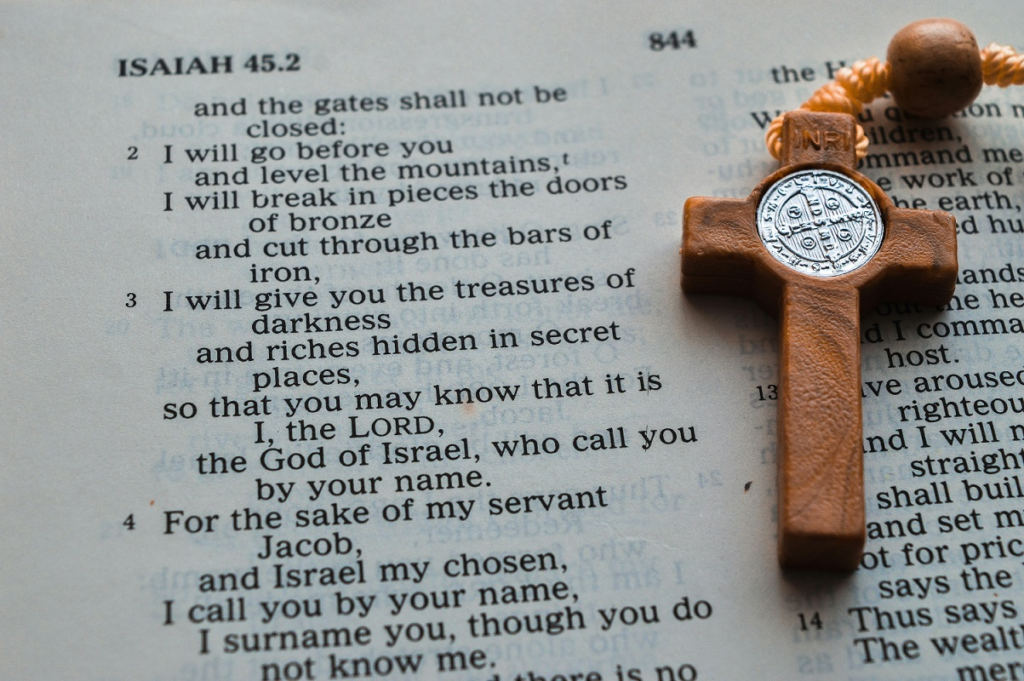
The prophet Isaiah ministered during one of the most turbulent periods in Israel’s history. Kings rose and fell. Enemy armies threatened from every border. The people of God were afraid, exhausted, and confused. Sound familiar?
Isaiah’s message was not soft optimism. It was grounded, prophetic truth — a reminder that the God who created the heavens and the earth had not abandoned His people. His words offered comfort in the face of judgment, and hope in the face of despair. That tension — between the reality of suffering and the certainty of God’s faithfulness — is exactly why the Book of Isaiah resonates so deeply with modern readers.
The Book of Isaiah is structured in three major movements:
| Chapters | Theme | Tone |
| 1–35 | Prophecies of judgment | Warning and correction |
| 36–39 | Historical narrative | Transition |
| 40–66 | The “Book of Comfort” | Hope, redemption, restoration |
It’s no coincidence that the most beloved Isaiah Bible verses come from chapters 40 through 66. This is the section where God turns toward His people and says, in essence: I see you. I have not forgotten you. I am not done.
Isaiah also foreshadowed the coming of Jesus Christ with stunning precision — from the virgin birth (Isaiah 7:14) to the suffering servant (Isaiah 53) to the proclamation of good news to the poor (Isaiah 61:1). Both the Old and New Testaments affirm Isaiah’s words as divinely inspired prophecy.
So when you read these verses, you’re not just reading ancient poetry. You’re reading the same Scripture that Jesus quoted, that the apostles preached, and that millions of believers worldwide still cling to in their darkest hours.
Isaiah 40:31 — Renewed Strength for the Weary
“But those who hope in the Lord will renew their strength. They will soar on wings like eagles; they will run and not grow weary, they will walk and not faint.” — Isaiah 40:31 (NIV)
This is perhaps the single most quoted verse in all of Isaiah. It has been written on hospital walls, whispered by dying saints, and memorized by soldiers in combat. Why? Because it meets people at their most human moment — the moment of complete exhaustion.
The Context Behind the Promise
Isaiah 40 opens with the word “Comfort.” God is speaking directly to a people who have received hard news. The Babylonian exile looms ahead. Everything they knew and loved is about to be stripped away. Into that darkness, God speaks this remarkable chapter.
Before reaching verse 31, Isaiah establishes a foundational truth in verses 28–30:
“Do you not know? Have you not heard? The Lord is the everlasting God, the Creator of the ends of the earth. He will not grow tired or weary, and his understanding no one can fathom. He gives strength to the weary and increases the power of the weak. Even youths grow tired and weary, and young men stumble and fall…”
The argument is logical and pastoral at the same time. You are limited. Even the strongest human being has a breaking point. But God does not grow tired. He does not run out of strength. And because He doesn’t, He can give what you cannot generate on your own.
What “Hope in the Lord” Actually Means
The Hebrew word translated as “hope” in Isaiah 40:31 is Qavah, which carries the meaning of twisting or binding together — like strands of rope being braided. To hope in the Lord is not passive wishful thinking. It is an active, deliberate act of tying yourself to God’s faithfulness.
This is also often translated as “wait upon the Lord” — not the kind of waiting that is anxious and restless, but the kind that is rooted in confident expectation. The person who waits on God believes that He is working even when the situation hasn’t changed yet.
Three Levels of God’s Renewal
Notice the progression in this verse — it actually works backwards from intensity to ordinary life:
- Soaring on wings like eagles — Moments of supernatural elevation; spiritual mountaintop experiences
- Running and not growing weary — Seasons of sustained effort and spiritual stamina
- Walking and not fainting — The quiet, daily faithfulness of putting one foot in front of the other
Many people expect God’s renewal to always look like soaring. But for most of us, most of the time, renewal looks like having the quiet strength to keep walking when everything in you wants to stop.
How to Apply Isaiah 40:31 to Your Life
- Memorize this verse and speak it aloud when anxiety rises
- Spend time daily in prayer, releasing your burdens and waiting quietly before God
- Stop striving in your own strength — acknowledge your limits, then trust His limitlessness
- Replace catastrophic thinking with the promise that God’s supply of strength is inexhaustible
Isaiah 41:10 — God’s Promise to Banish Fear
“So do not fear, for I am with you; do not be dismayed, for I am your God. I will strengthen you and help you; I will uphold you with my righteous right hand.” — Isaiah 41:10 (NIV)
If Isaiah 40:31 speaks to exhaustion, then Isaiah 41:10 speaks directly to fear. And it doesn’t just address it — it dismantles it with four of the most powerful promises in all of Scripture.
Breaking Down God’s Four-Part Promise
This verse is structured as a set of paired statements, each one building on the last:
1. “Do not fear, for I am with you.” The most common command in the entire Bible is “Fear not” — some theologians count it 365 times, once for every day of the year. God’s solution to fear is not the removal of the threat, but the guarantee of His presence. He doesn’t promise that the storm won’t come. He promises that you will not face it alone.
2. “Do not be dismayed, for I am your God.” Dismayed in the original Hebrew (sha’at) means to look around in anxiety or be overwhelmed by your circumstances. The antidote is identity — I am your God. You are not an orphan navigating life alone. You belong to the God who created the universe.
3. “I will strengthen you and help you.” Two distinct promises packed into one short phrase. God will supply inner strength chazaq — to make firm, to make bold) and He will offer active assistance. This is a hands-on God, not a distant deity.
4. “I will uphold you with my righteous right hand.” In the ancient Near East, the right hand was the hand of power and action. God’s righteous right hand means He upholds you not just with strength but with perfect justice and covenant love. This isn’t a reluctant God being talked into helping you. This is a God who chooses to hold you up.
When This Verse Hits Hardest
Isaiah 41:10 becomes most relevant during:
- Health crises — when doctors deliver frightening news
- Job loss or financial instability — when the ground shifts beneath you
- Relationship breakdown — when trusted people walk away
- Seasons of grief — when loss threatens to swallow your hope
- Spiritual warfare — when fear seems to come out of nowhere
In every one of these moments, this verse is not a platitude. It is a covenant promise from the God who does not lie (Numbers 23:19). Write it on a card. Tape it to your mirror. Speak it over your situation until your spirit catches up with what your mind is slowly learning to believe.
Isaiah 26:3 — The Path to Perfect Peace
“You will keep in perfect peace those whose minds are steadfast, because they trust in you.” — Isaiah 26:3 (NIV)
In a world of noise, notifications, and constant uncertainty, the promise of perfect peace sounds almost too good to be true. Yet Isaiah 26:3 is not making a vague spiritual suggestion. It is describing a cause-and-effect relationship between mental focus and divine peace.
Understanding “Perfect Peace”
The original Hebrew here is remarkable: shalom shalom — the word shalom written twice. In Hebrew literature, repetition conveys intensity and totality. This isn’t partial peace. It isn’t peace-when-things-go-well. It is a complete, double-layered, all-encompassing peace that surpasses natural explanation.
This is the same concept the Apostle Paul described in Philippians 4:7 as “the peace of God, which transcends all understanding.” It is not the absence of trouble. It is a deep, internal settledness that exists despite trouble.
The Condition: A Steadfast Mind
Isaiah 26:3 does come with a condition — and it’s important to understand it clearly. The peace is given to those whose minds are steadfast, which in Hebrew (samak) means stayed, leaning on, or supported by God.
The idea is that of a person whose mental and emotional weight is being held up by their trust in God. They are not white-knuckling their way through anxiety. They are actively redirecting their minds toward who God is — His faithfulness, His sovereignty, His love — rather than fixating on worst-case scenarios.
This does not mean ignoring reality. It means choosing, deliberately and repeatedly, to interpret reality through the lens of God’s character rather than your circumstances.
Practical Steps to a Steadfast Mind
| Practice | What It Looks Like |
| Scripture meditation | Reading and re-reading promises like Isaiah 40:31, 41:10 daily |
| Prayerful surrender | Naming specific fears aloud to God and releasing them |
| Gratitude journaling | Writing down evidence of God’s past faithfulness |
| Worship | Singing or listening to worship music that redirects focus to God |
| Christian community | Sharing burdens with trusted believers who speak truth |
Peace is not a mood. It’s a practice. The more consistently you fix your mind on God, the more consistently you will experience the shalom shalom that only He can give.
More Life-Changing Isaiah Bible Verses Worth Knowing
Beyond the three anchor verses above, the Book of Isaiah is packed with extraordinary promises. Here are additional scriptures that top the list of most-shared and most-memorized Isaiah verses among believers:
Isaiah 43:2 — Through the Waters, Not Around Them
“When you pass through the waters, I will be with you; and when you pass through the rivers, they will not sweep over you. When you walk through the fire, you will not be burned; the flames will not set you ablaze.”
God doesn’t promise to remove every trial. He promises to be present in every trial. This verse is for anyone who feels like they’re drowning — spiritually, emotionally, or practically. The waters are real, but so is His presence.
Isaiah 53:5 — Healing Through the Servant
“But he was pierced for our transgressions, he was crushed for our iniquities; the punishment that brought us peace was on him, and by his wounds we are healed.”
Written roughly 700 years before Jesus walked the earth, this verse is one of the most stunning messianic prophecies in Scripture. It describes the suffering servant — identified by the New Testament as Jesus Christ — whose sacrifice brings healing and restoration to every person who trusts in Him. This is not just physical healing; it encompasses spiritual wholeness, forgiveness, and peace with God.
Isaiah 61:1–3 — Beauty for Ashes
“…to bestow on them a crown of beauty instead of ashes, the oil of joy instead of mourning, and a garment of praise instead of a spirit of despair. They will be called oaks of righteousness, a planting of the Lord for the display of his splendor.”
This passage — which Jesus quotes in Luke 4:18-19 to announce His own ministry — is for anyone who feels like their life has been reduced to ashes. Broken marriages. Failed dreams. Abuse. Addiction. Grief. God specializes in transformation. He does not just fix broken things — He makes them something more beautiful than they were before.
Isaiah 58:11 — Guidance and Nourishment
“The Lord will guide you always; he will satisfy your needs in a sun-scorched land and will strengthen your frame. You will be like a well-watered garden, like a spring whose waters never fail.”
This verse speaks to provision and direction for those feeling spiritually parched or directionally confused. God promises to guide, satisfy, and strengthen — not occasionally, but always.
Isaiah 9:6 — The Names of Jesus
“For to us a child is born, to us a son is given, and the government will be on his shoulders. And he will be called Wonderful Counselor, Mighty God, Everlasting Father, Prince of Peace.”
One of the most beloved Christmas scriptures in the world, Isaiah 9:6 is a prophetic declaration of the nature of Jesus Christ. When you need counsel, He is the Wonderful Counselor. When you need power, He is the Mighty God. When you need a Father, He is the Everlasting Father. When you need peace — He is the Prince of Peace.
A Quick-Reference Guide to Isaiah Verses by Need
| What You’re Facing | Recommended Isaiah Verse |
| Exhaustion and burnout | Isaiah 40:31 |
| Fear and anxiety | Isaiah 41:10 |
| Need for peace | Isaiah 26:3 |
| Walking through trials | Isaiah 43:2 |
| Need for forgiveness/healing | Isaiah 53:5 |
| Brokenness and grief | Isaiah 61:1–3 |
| Need for direction | Isaiah 58:11 |
| Spiritual encouragement | Isaiah 40:29 |
| Hope for new beginnings | Isaiah 43:19 |
| Identity and belonging | Isaiah 43:1 |
Who Was Isaiah the Prophet?
Isaiah son of Amoz was a prophet in Jerusalem who ministered from approximately 740 to 700 BC — a span of over 40 years across the reigns of four kings of Judah: Uzziah, Jotham, Ahaz, and Hezekiah. Unlike some prophets who came from rural backgrounds, Isaiah appears to have been a man of education and social standing, with direct access to the royal court.
His name in Hebrew means “The Lord saves” — a fitting name for a prophet whose dominant message was God’s redemptive love for His people.
The Book of Isaiah is the longest of the prophetic books and is sometimes called “the Fifth Gospel” because of its extraordinary number of prophecies pointing to Jesus Christ. Scholars have identified over 60 direct fulfillments in the New Testament.
Key themes running through the Book of Isaiah include:
- God’s holiness and justice
- Human sin and its consequences
- Divine compassion and redemptive love
- The coming Messiah
- The restoration of Israel
- God’s sovereignty over all nations
- The new creation and eternal kingdom
Isaiah was not just a preacher of doom. He was one of the greatest hope-givers in the entire Bible. His words have comforted exiles in Babylon, martyrs in the early church, enslaved people through the centuries, and millions of ordinary believers navigating ordinary hardship.
How to Use Isaiah Verses in Your Daily Life
These verses aren’t meant to be collected like trading cards. They’re designed to be lived. Here are practical ways to let Isaiah’s words work in your daily experience:
1. Scripture Memory
Choose one verse per week. Write it on a card. Read it morning and night. Speak it aloud. The act of memorizing Scripture is itself a spiritual discipline that shapes how your brain processes fear and uncertainty.
2. Prayer-Based Application
Take a verse and turn it into a prayer. For example, with Isaiah 41:10: “Lord, I choose not to fear today, because You are with me. I refuse to be dismayed, because You are my God. I ask You to strengthen and help me, and I trust that Your righteous right hand is holding me up.”
3. Journaling
Write out a verse, then write about how it connects to what you’re facing. What would your situation look like if you fully believed this promise? What would change in your attitude, your decisions, your relationships?
4. Community Sharing
Share a verse with a friend or family member who is struggling. Often the most powerful use of Isaiah’s words is as a gift to someone else.
5. Worship Integration
Many worship songs are drawn directly from Isaiah. When you sing them, you’re not just making music — you’re declaring prophetic truth over your life.
The Timeless Power of Isaiah’s Message
What makes Isaiah’s Bible verses so enduring is that they were not written for a comfortable people. They were written for people in crisis — facing exile, loss, fear, and hopelessness. That’s the exact situation where these promises do their most powerful work.
The God of Isaiah is not a deity who shows up when life is easy and disappears when things get hard. He is the Everlasting God, the Creator of the ends of the earth, who gives strength to the weary and lifts up the fallen. He keeps in perfect peace the person whose mind is fixed on Him. He says do not fear not because there is nothing to fear, but because He is greater than every fear.
When you read Isaiah 40:31 in a hospital waiting room, it’s not a cliché — it’s a covenant promise. When you cling to Isaiah 41:10 during a panic attack at 3 in the morning, you’re not reciting poetry — you’re grabbing hold of the hand of a God who promised to uphold you.
These words have outlasted every empire and every crisis they were written into. They will outlast yours too.
Conclusion
The Book of Isaiah is one of the most extraordinary gifts in all of Scripture. Within its 66 chapters, you will find judgment and mercy woven together in ways that reveal the full character of God. You will find prophecies of a Savior who was coming to redeem a broken world. And you will find, scattered throughout like gold in a riverbed, some of the most powerful promises ever written about hope, strength, and peace.
Start with the three anchor verses explored in this article:
- Isaiah 40:31 — when you are tired
- Isaiah 41:10 — when you are afraid
- Isaiah 26:3 — when you need peace
Memorize them. Pray for them. Share them. Let them do what they were always designed to do — carry you through the hardest seasons of your life into the presence of a God who is not surprised by your circumstances and is not running out of strength on your behalf.
He is the Everlasting God. And He is for you.
Frequently Asked Questions
Q: What is the most famous verse in Isaiah?
A: Isaiah 40:31 is widely considered the most beloved and frequently quoted verse in the entire Book of Isaiah, offering the promise of renewed strength to all who wait on God.
Q: What does Isaiah 40:31 mean in simple terms?
A: It means that people who place their trust and hope in God — rather than relying solely on their own strength — will be supernaturally renewed and empowered to keep going even when life is overwhelming.
Q: Is the Book of Isaiah in the Old Testament?
A: Yes. Isaiah is the first book of the Major Prophets section of the Old Testament, containing 66 chapters.
Q: What does “perfect peace” mean in Isaiah 26:3?
A: The Hebrew original uses the phrase shalom shalom — a doubled word signifying complete, total, all-encompassing peace that comes from keeping one’s mind fixed on God.
Q: How many messianic prophecies are in Isaiah?
A: Biblical scholars have identified over 60 prophecies in Isaiah that were fulfilled in the life, death, and resurrection of Jesus Christ, which is why Isaiah is sometimes called “the Fifth Gospel.”
Q: What does Isaiah 41:10 say about fear?
A: It commands believers not to fear because God is personally present, actively strengthening, and continually upholding them — it’s a four-fold promise covering presence, identity, empowerment, and support.
Q: Can I use Isaiah verses for daily devotions?
A: Absolutely. Isaiah’s verses are ideal for daily meditation, prayer, and memorization — especially during difficult seasons of life when faith needs anchoring in specific promises.
Q: What does it mean to “soar on wings like eagles” in Isaiah 40:31?
A: It describes moments of spiritual elevation and supernatural strength that lift believers above their circumstances — made possible not by human effort, but by waiting on and trusting in God.
Q: What is the main message of the Book of Isaiah?
A: At its core, Isaiah’s message is that God is holy, faithful, and sovereign — and that despite human failure and suffering, He has a redemptive plan that leads to restoration, salvation, and eternal peace.
Q: Who wrote the Book of Isaiah?
A: The Book of Isaiah was written by the prophet Isaiah, son of Amoz, who ministered in Jerusalem from approximately 740–700 BC during a period of intense national crisis in Judah.

I have 7 years of experience with strong knowledge of how to create content that informs and inspires. I am passionate about writing and sharing Bible guidance. To help people grow in faith and understand God’s Word
